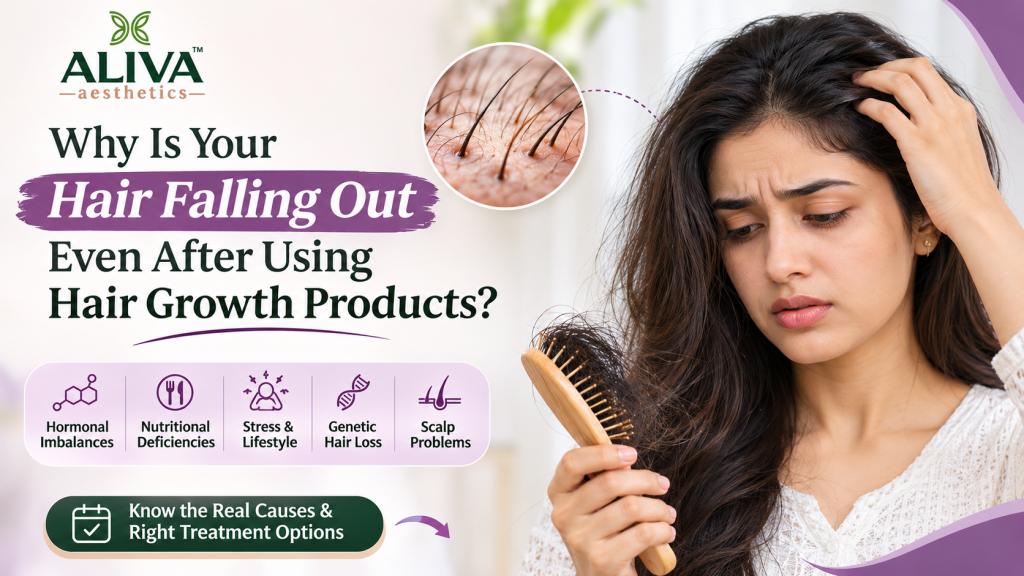
Why Is Your Hair Falling Out Even After Using Hair Growth Products?
Are you using expensive shampoos, hair growth serums, or oils but still experiencing excessive hair fall? You are not alone. Many people follow regular hair care routines but struggle to see noticeable improvements.
However, hair fall despite using hair growth products may indicate an underlying problem that these products cannot address.
Although hair growth products may support scalp health, they cannot treat every cause of hair loss. Therefore, understanding why your hair continues to fall is important.
At Aliva Aesthetics, specialists focus on identifying the causes of hair loss and recommending personalized treatment options for healthier hair growth.
Why Are Hair Growth Products Not Working?
Hair growth products are designed to address specific concerns. However, not every product works for every type of hair loss.
For example, some shampoos improve scalp cleanliness, while certain medicated treatments help manage specific hair loss conditions.
Nevertheless, if your hair fall is caused by hormonal changes, nutritional deficiencies, or medical conditions, regular cosmetic products may not provide sufficient results.
Therefore, identifying the underlying cause is essential before choosing a suitable hair fall treatment.
7 Reasons Your Hair Is Still Falling Out
1. Hormonal Imbalances
Firstly, hormonal changes are among the common causes of persistent hair loss.
Conditions such as thyroid disorders, polycystic ovary syndrome (PCOS), and androgenetic alopecia may affect normal hair growth.
As a result, hair follicles may gradually produce thinner strands.
Moreover, regular hair oils and shampoos cannot correct hormonal imbalances. Therefore, professional evaluation may be necessary.
2. Nutritional Deficiencies
Secondly, healthy hair growth depends on proper nutrition.
Your hair follicles need essential nutrients to support normal growth.
For instance, deficiencies in iron, protein, zinc, or certain vitamins may contribute to increased shedding.
Additionally, restrictive diets and sudden weight loss can affect the hair growth cycle.
Therefore, eating a balanced diet is important for maintaining healthy hair.
For further guidance, explore 8 Foods That Make Hair Fall Worse and What to Eat Instead.
3. Stress and Lifestyle Changes
Thirdly, physical and emotional stress can trigger excessive hair shedding.
For example, major illness, surgery, significant weight changes, or emotional stress may cause temporary hair loss.
This condition is commonly called telogen effluvium.
Consequently, more hair follicles enter the resting phase, leading to increased shedding several weeks or months later.
Although this condition often improves after the trigger resolves, persistent shedding requires medical attention.
4. Using the Wrong Hair Growth Products
Another common reason for continued hair fall is choosing unsuitable products.
For instance, using a strengthening shampoo for hereditary hair loss may not address the actual problem.
Similarly, some products may irritate sensitive scalps and worsen discomfort.
Therefore, selecting products based on your scalp condition and hair loss type is important.
5. Scalp Problems and Dandruff
Furthermore, a healthy scalp provides a suitable environment for normal hair growth.
However, conditions such as seborrheic dermatitis, scalp psoriasis, and fungal infections may cause inflammation or contribute to hair shedding.
Additionally, persistent itching, redness, and scaling can indicate an underlying scalp problem.
Therefore, treating the scalp condition is important rather than depending only on hair growth serums.
6. Genetic Hair Loss
Genetics also plays an important role in hair thinning.
Androgenetic alopecia, commonly called pattern hair loss, can affect both men and women.
Over time, hair follicles become smaller and produce thinner hair.
As a result, people may notice a receding hairline, widening hair parting, or reduced hair density.
Although some medical treatments can slow progression, regular cosmetic products alone may not be enough.
Learn more about Androgenic Alopecia Treatment at Aliva Aesthetics.
7. Expecting Results Too Quickly
Finally, hair growth requires patience and consistency.
Hair follicles follow natural growth, resting, and shedding cycles. Therefore, visible improvements usually take time.
For example, certain evidence-based hair loss treatments may require three to six months before noticeable changes appear.
Moreover, some treatments may initially cause temporary shedding.
However, continued or worsening hair loss should be discussed with a dermatologist rather than ignored.
How Can You Reduce Hair Fall Effectively?
Instead of frequently changing hair products, focus on identifying and managing the underlying cause.
Consider these practical steps:
- Identify the cause: Consult a dermatologist for persistent or sudden hair loss.
- Maintain a balanced diet: Include adequate protein, iron-rich foods, and essential nutrients.
- Choose suitable products: Use gentle hair care products appropriate for your scalp.
- Avoid excessive styling: Reduce frequent heat styling and tight hairstyles.
- Manage stress: Maintain regular sleep, exercise, and healthy daily habits.
- Follow medical advice: Use prescribed treatments consistently and attend follow-up appointments.
Additionally, avoid taking hair supplements unnecessarily unless a deficiency or medical need has been identified.
When Should You Consider Professional Hair Fall Treatment?
If your hair continues thinning despite consistent care, professional treatment may help address the underlying condition.
At Aliva Aesthetics, specialists evaluate hair density, scalp health, medical history, and potential causes before recommending appropriate options.
Depending on individual needs, treatment may include medical therapy or procedures such as PRP and GFC.
However, results vary, and these treatments are not suitable for every type of hair loss.
To understand these options, read GFC vs PRP Hair Treatment: Which Is Better for Hair Regrowth?.
Additionally, explore Advanced Hairfall Control Treatments in Vijayawada for more information.
Frequently Asked Questions
1. Why is my hair falling out despite using hair growth serum?
Hair loss may continue because of hormonal changes, nutritional deficiencies, genetic factors, or scalp conditions. Therefore, identifying the underlying cause is essential.
2. Can hair growth products stop hair fall permanently?
Not necessarily. Although certain medically proven products can manage specific hair loss conditions, many cosmetic products cannot treat the root cause.
3. How long does hair regrowth treatment take?
Depending on the condition and treatment, visible improvements may take several months. However, individual results vary.
4. When should I consult a dermatologist for hair loss?
Consult a dermatologist if you experience sudden shedding, bald patches, persistent thinning, scalp inflammation, or noticeable changes in hair density.
Conclusion
Hair growth products alone cannot solve every hair loss problem. Therefore, understanding the actual cause is more important than repeatedly changing shampoos, oils, or serums.
Moreover, early evaluation can help identify treatable conditions and guide suitable care.
If you are experiencing persistent hair fall, visit Aliva Aesthetics for professional guidance and personalized hair loss treatment in Vijayawada and Guntur.
Book your consultation today and take the first step toward healthier hair.