You oil your hair regularly. You’ve changed your shampoo twice. You may have even started a biotin supplement. Yet every morning, the comb tells the same story.
Before you blame your hair products, take a look at your plate. Some of the most common foods that cause hair fall are sitting in almost every Indian kitchen — and most people eat them daily without a second thought.
In this guide, the hair specialists at Aliva Aesthetics break down 8 everyday foods to avoid for hair loss, explain why each one hurts your hair, and share simple swaps that support regrowth. We’ll also tell you when hair fall is a sign of something your diet alone can’t fix.
Why Your Diet Affects Your Hair More Than You Think
Hair follicles are among the fastest-growing cells in your body, and they need a constant supply of protein, iron, zinc, and vitamins to keep producing strong strands.
Here’s the catch: your body treats hair as “non-essential.” When nutrition dips or inflammation rises, nutrients are redirected to vital organs first — and your hair is the first thing to suffer. Follicles shrink, more strands slip into the resting phase, and a few weeks later, you notice extra shedding.
That’s why what you eat (and what you stop eating) shows up on your scalp within months.
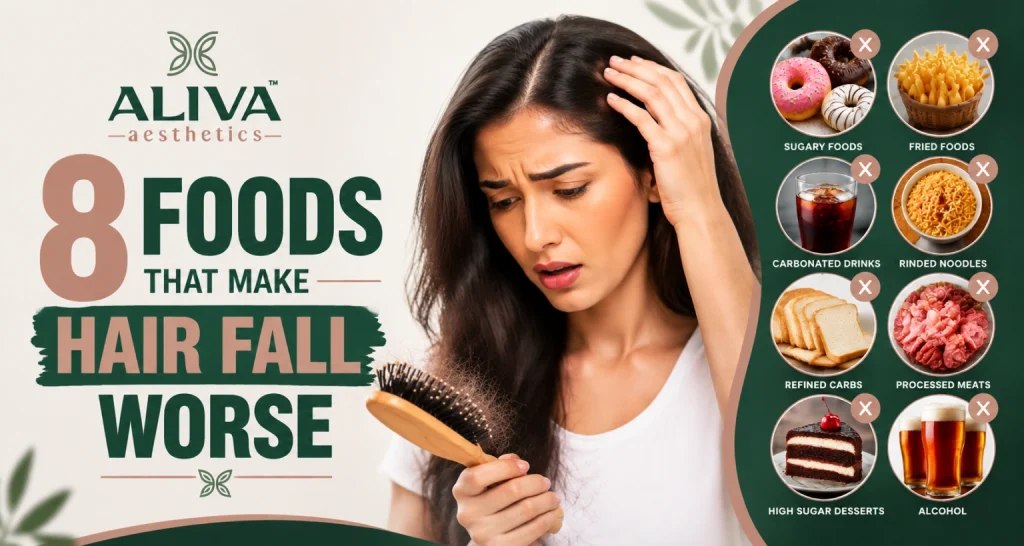
8 Everyday Foods That Cause Hair Fall
1. Sugar and Refined Carbs
Sweets, white bread, maida biscuits, and bakery snacks spike your blood sugar rapidly. Repeated insulin spikes promote inflammation and can increase androgen activity — the same hormones linked to pattern hair loss in both men and women. High-sugar diets are also consistently associated with dull, thinning hair.
Swap it with: Whole wheat, millets like ragi and jowar, oats, and fresh fruit when you crave something sweet.
2. Deep-Fried and Oily Foods
Samosas, bajjis, pakoras, and chips — especially those fried in reused oil — are loaded with unhealthy fats. These promote inflammation and excess sebum (oil) on the scalp, which can clog follicles and worsen dandruff. A greasy, inflamed scalp is a poor environment for healthy hair growth.
Swap it with: Roasted makhana, roasted chana, nuts, or baked and air-fried versions of your favourite snacks.
3. Sugary Drinks and Colas
Liquid sugar hits your system even faster than sweets. A 2023 study published in the journal Nutrients, covering over 1,000 young adults, found that men who regularly consumed sugar-sweetened drinks had a significantly higher risk of hair loss than those who didn’t.
Swap it with: Buttermilk (majjiga), coconut water, or nimbu pani without sugar — all far kinder to your hair and your skin.
4. High-Mercury Fish
Fish is excellent for hair — but large predatory fish like swordfish, shark, and king mackerel accumulate high levels of mercury. Mercury build-up in the body is a documented cause of hair loss. An occasional serving is fine; the problem is eating these varieties frequently.
Swap it with: Smaller fish like sardines, anchovies, and Indian mackerel, or salmon. They’re rich in omega-3 fatty acids and naturally low in mercury.
5. Alcohol
Regular drinking dehydrates the body and depletes zinc, folate, and vitamin B12 — three nutrients your follicles depend on. Alcohol also disturbs sleep and raises stress hormones, both of which are known triggers for increased shedding.
Swap it with: If you drink, keep it occasional and stay well hydrated. Your hair (and skin) will reflect the difference within months.
6. Ultra-Processed and Salty Packaged Snacks
Instant noodles, chips, and packaged namkeen deliver a lot of sodium and calories but almost no real nutrition. The bigger issue is displacement: they fill you up without feeding your follicles, crowding out the protein- and iron-rich foods your hair actually needs.
Swap it with: Fresh, home-cooked meals and simple snacks like curd, fruit, sprouts, or roasted seeds.
7. Raw Egg Whites
Surprised? Cooked eggs are one of the best foods for hair — but raw egg whites are a different story. They contain avidin, a protein that binds biotin and blocks its absorption. People who regularly drink raw egg protein shakes (a common gym habit) can develop biotin deficiency, leading to brittle hair and shedding.
Swap it with: Boiled, scrambled, or cooked eggs. Cooking deactivates avidin, giving you all the protein and biotin with none of the downside.
8. Vitamin A Overload from Mega-Dose Supplements
With vitamins, more is not better. Excess vitamin A (hypervitaminosis A) is a well-documented cause of hair shedding — and it usually comes from stacking multiple high-dose supplements, not from food.
Swap it with: Get vitamin A naturally from carrots, sweet potato, papaya, and leafy greens. Your body converts beta-carotene as needed, with no toxicity risk. Take supplements only if a doctor prescribes them.
What to Eat Instead: A Simple Diet for Hair Growth
You don’t need an expensive superfood list. A balanced Indian plate already contains everything your hair needs:
- Protein at every meal — eggs, dal, rajma, chana, paneer, curd, chicken, or fish. Hair is made of keratin, a protein; without enough of it, growth simply slows down.
- Iron with vitamin C — leafy greens like palak and gongura, plus amla, guava, or a squeeze of lemon. Vitamin C multiplies iron absorption, and iron deficiency is one of the biggest causes of hair fall in Indian women.
- Omega-3 fats — flaxseeds, walnuts, and fatty fish keep the scalp nourished and reduce inflammation.
- Zinc and biotin — pumpkin seeds, sesame seeds (til), nuts, and whole cooked eggs support the follicle’s growth machinery.
- Plenty of water — a dehydrated body produces dry, brittle strands that break easily.
Consistency matters more than perfection. Follow this pattern for 3–6 months — the length of a full hair growth cycle — and you’ll see the difference.
When Diet Alone Won’t Stop Your Hair Fall
Here’s the honest truth most articles skip: if your hair fall is caused by androgenic alopecia (pattern baldness), thyroid imbalance, PCOS, post-illness shedding, or a severe deficiency, fixing your diet will help — but it won’t reverse the problem on its own.
See a specialist if you notice:
- A widening hair partition or receding hairline
- Sudden patches of hair loss
- More than 100 strands falling daily for several weeks
- Visible scalp under normal lighting
This is where choosing the best hair clinic in Vijayawada makes all the difference. At Aliva Aesthetics, our doctors first diagnose the root cause of your hair fall — because treating the wrong cause wastes months. Based on your diagnosis, we offer advanced solutions like GFC (Growth Factor Concentrate) therapy, which uses growth factors from your own blood to reactivate weakened follicles — no surgery, minimal downtime.
Frequently Asked Questions
Can changing my diet alone stop hair fall?
If your hair fall is caused by a nutritional deficiency, yes — you can see real improvement in 3–6 months. But genetic, hormonal, or medical hair loss needs professional treatment alongside a good diet.
How long does it take to see results after improving my diet?
Hair grows in slow cycles, so give it at least 3–6 months of consistent eating before judging the results. The strands growing today reflect what you ate weeks ago.
Do eggs cause hair fall?
No — this is a myth. Cooked eggs are among the best foods for hair growth. Only raw egg whites are a problem, because they block biotin absorption.
Which deficiency causes the most hair fall?
Iron deficiency is the most common culprit, especially in Indian women. Protein, vitamin D, vitamin B12, and zinc deficiencies follow close behind. A simple blood test can identify yours.
The Takeaway
Small swaps compound: less sugar and fried food, more protein, greens, and water — and your hair gets the raw material it needs to grow back stronger. But if the shedding continues even after you’ve cleaned up your diet, don’t wait and watch. Get the cause diagnosed.
Worried about hair fall that won’t stop? Book a consultation at Aliva Aesthetics — the best hair clinic in Vijayawada, right here in Guru Nanak Colony.
📞 Call: +91 98514 74474 | 💬 WhatsApp us | 🗓️ Book an Appointment
Open Monday–Sunday, 10 AM – 8 PM.