
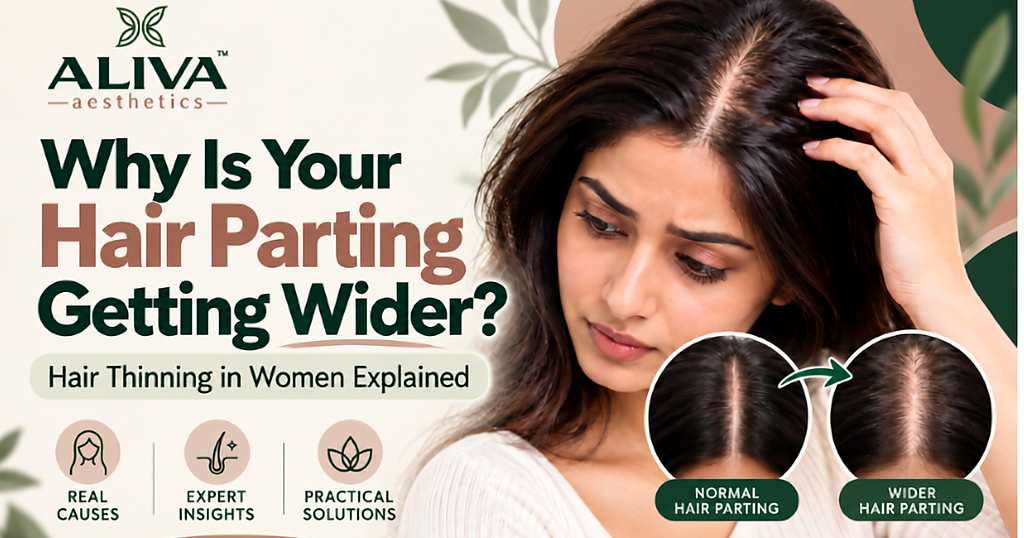
Why Is Your Hair Parting Getting Wider? Hair Thinning in Women Explained
You part your hair the same way every day. However, one morning, under the bathroom light, you notice that your parting looks wider than before. Moreover, your scalp seems more visible, and your ponytail feels thinner in your hand.
If this sounds familiar, you are not alone. In fact, hair thinning is one of the common concerns women bring to Aliva Aesthetics, a hair clinic in Vijayawada and Guntur. Fortunately, many causes of hair thinning in women can be managed with appropriate treatment, especially when identified early.
However, the first step is understanding why your hair is thinning. For example, a widening parting may result from hormonal changes, thyroid problems, low iron levels, stress, or genetics. Since each cause requires a different approach, getting a proper diagnosis is important.
Therefore, if you are looking for hair loss treatment in Vijayawada or hair loss treatment in Guntur, here is what you should know before starting treatment.
Quick Check: What Is Your Hair Telling You?
Different patterns of hair loss can indicate different underlying conditions. Therefore, observing how your hair is changing can help you understand when to seek professional advice.
- Wider parting and more visible scalp: This may indicate female pattern hair loss, especially when thinning occurs gradually.
- Sudden heavy shedding across the scalp: This may result from stress, illness, childbirth, or nutritional deficiencies.
- Thinning with irregular periods or unwanted facial hair: These symptoms may suggest PCOS-related hair loss.
- Thinning with tiredness, weight changes, or dry, brittle hair: In this case, thyroid problems or low iron levels may be contributing factors.
- Round bald patches: These may indicate alopecia areata and therefore require a different treatment approach.
Although these signs provide useful clues, they do not confirm a diagnosis. Consequently, a scalp examination by a dermatologist is important for identifying the actual cause.
Hair Fall vs Hair Thinning: What’s the Difference?
Losing around 50 to 100 hairs per day is generally considered normal. This happens because hair naturally moves through growth, resting, and shedding phases.
However, hair fall and hair thinning are not exactly the same.
Hair fall occurs when more hair sheds than usual. For example, you may notice additional strands on your pillow, comb, or bathroom floor. In some cases, this shedding begins after illness, stress, or childbirth.
Hair thinning, on the other hand, happens when hair gradually loses density. This may occur because new hairs grow back finer or fewer hairs grow in certain areas.
As a result, you may notice a wider parting or reduced ponytail volume even without excessive shedding.
Furthermore, hair thinning can develop slowly, making it difficult to identify in the early stages.
Therefore, if your parting continues to widen, consulting a hair specialist in Vijayawada or Guntur can help identify the cause before choosing a treatment.
6 Common Causes of Hair Thinning in Women
Hair thinning does not have just one cause. Instead, several medical, hormonal, nutritional, and lifestyle factors may contribute to the condition.
1. Female Pattern Hair Loss
Female pattern hair loss is one of the most common reasons for gradual hair thinning in women.
It is often influenced by genetics and the way hair follicles respond to hormonal factors. As a result, the hair parting gradually becomes wider, while the frontal hairline often remains relatively unchanged.
Additionally, the hair around the crown may become finer over time.
Although female pattern hair loss is usually progressive, appropriate treatment can help slow further thinning and improve hair density in some women.
Therefore, early diagnosis is important for maintaining existing hair.
2. PCOS
Polycystic Ovary Syndrome (PCOS) is a hormonal condition that can affect hair growth.
In some women, PCOS is associated with higher androgen activity. Consequently, scalp hair may become thinner, particularly around the crown.
At the same time, some women may experience unwanted facial hair, acne, or irregular periods.
However, not every woman with PCOS experiences hair loss.
When PCOS contributes to thinning, treatment may involve managing the underlying hormonal condition alongside scalp-specific care.
Therefore, PCOS hair loss treatment should be based on individual symptoms and medical evaluation.
3. Thyroid Problems
Both an underactive thyroid and an overactive thyroid can affect the normal hair growth cycle.
As a result, some women experience diffuse hair thinning across the scalp.
Furthermore, thyroid-related hair changes may occur alongside tiredness, weight changes, or changes in skin texture.
Fortunately, hair shedding may improve after thyroid levels are appropriately managed. However, recovery often takes time because hair grows slowly.
Therefore, thyroid testing may be recommended when symptoms suggest a possible thyroid condition.
4. Low Iron, Vitamin D, or Vitamin B12
Nutritional deficiencies may also contribute to hair shedding and thinning.
For example, low iron levels can affect hair growth, particularly in women with heavy menstrual bleeding or inadequate dietary iron intake.
Similarly, vitamin D or vitamin B12 deficiencies may be relevant in some individuals, depending on their overall health and diet.
However, not every case of hair thinning is caused by a vitamin deficiency.
Therefore, blood tests should be selected based on symptoms and medical history rather than taking supplements without proper evaluation.
In addition, correcting an identified deficiency may support healthier hair growth over time.
5. After Delivery, Fever, or Major Stress
Many women notice increased hair shedding a few months after childbirth.
This happens because hormonal changes can shift more hairs into the shedding phase. Similarly, high fever, major illness, surgery, or significant physical or emotional stress may trigger temporary shedding.
This condition is often called telogen effluvium.
Fortunately, this type of hair shedding often improves once the trigger has resolved.
However, recovery may take several months. Furthermore, ongoing shedding can sometimes reveal an underlying hair thinning condition.
Therefore, persistent or severe hair loss should be evaluated by a dermatologist.
6. Harsh Styling and Hair Treatments
Hairstyling practices can also affect hair health.
For example, tight buns, braids, and ponytails may place repeated tension on hair follicles.
Over time, this can lead to traction alopecia.
Additionally, frequent heat styling, chemical straightening, and colouring may damage the hair shaft and increase breakage.
As a result, hair may appear thinner or weaker.
Therefore, choosing gentle hairstyles and reducing unnecessary chemical or heat exposure can help protect your hair.
What Happens at Your Hair Consultation?
A consultation at our hair clinic in Vijayawada or Guntur begins with understanding your symptoms and examining your scalp.
Instead of recommending the same treatment to everyone, the doctor evaluates possible causes of hair thinning.
1. Your Medical History
First, the hair specialist asks when the thinning started and how it has progressed.
Additionally, the consultation may include questions about menstrual cycles, recent illness, childbirth, diet, stress, medications, and previous hair treatments.
This information is important because it can reveal factors contributing to hair loss.
2. Scalp Examination
Next, the dermatologist examines your hair parting, crown, hairline, and overall scalp condition.
For example, the doctor may look for signs of miniaturisation, inflammation, patchy hair loss, or scalp disorders.
As a result, the examination helps narrow down the possible causes.
3. Blood Tests, If Needed
In some cases, blood tests may be recommended.
For example, thyroid function, ferritin, vitamin levels, or relevant hormonal tests may help identify contributing conditions.
However, not every patient requires the same investigations.
Therefore, testing is usually based on the findings from the consultation.
4. Your Personalised Treatment Plan
Finally, the dermatologist recommends a treatment plan based on your diagnosis.
Depending on the cause, the plan may include medical treatment, nutritional correction, scalp care, or selected hair procedures.
Additionally, the doctor can explain realistic expectations, follow-up visits, and the time required to assess improvement.
Therefore, a structured consultation is more useful than repeatedly switching shampoos or trying unverified remedies.
Best Hair Loss Treatment for Women
The best hair thinning treatment for women depends on the underlying cause, severity, and overall health.
At Aliva Aesthetics, our hair clinic in Guntur and Vijayawada, treatment planning begins with a scalp assessment. Additionally, when medically necessary, blood tests may help identify thyroid, nutritional, or hormonal factors.
Although several treatment options are available, not every treatment is suitable for every patient.
Medical Treatment
Doctor-prescribed topical treatments, including minoxidil when appropriate, may help manage certain types of hair loss.
In selected cases, oral medications may also be considered.
However, these treatments should be recommended by a qualified dermatologist because suitability, possible side effects, and precautions vary.
For example, some hair loss medications are unsuitable during pregnancy or breastfeeding.
Therefore, medical supervision is essential.
GFC Hair Treatment
GFC (Growth Factor Concentrate) is a procedure that uses a preparation derived from the patient’s own blood.
The prepared concentrate contains growth factors and is used in selected hair treatment protocols.
Additionally, GFC may be considered alongside other medical treatments in certain cases of hair thinning.
However, evidence about its long-term effectiveness is still developing, and individual results can vary.
Therefore, patients considering GFC hair treatment in Vijayawada or Guntur should discuss the potential benefits, limitations, costs, and alternatives with their dermatologist.
PRP Hair Treatment
PRP (Platelet-Rich Plasma) is another procedure that uses a preparation obtained from the patient’s blood.
The platelet-rich portion is processed and used in an attempt to support hair follicle function.
Furthermore, some studies suggest that PRP may improve hair density in selected patients with pattern hair loss.
However, treatment protocols and individual responses vary, and benefits are not guaranteed.
Therefore, your dermatologist can help determine whether PRP, GFC, or another treatment approach is appropriate for you.
Treating the Root Cause
In many cases, identifying and managing the underlying cause is an important part of treatment.
For example, correcting an iron deficiency may help when low iron contributes to shedding.
Similarly, managing thyroid disorders or PCOS may help address associated hair concerns.
However, correcting these conditions does not guarantee complete hair regrowth, particularly when genetic hair loss is also present.
Therefore, combining appropriate medical management with scalp-specific treatment may be necessary.
Scalp Care
Healthy scalp care is another important part of managing hair concerns.
For instance, dandruff, inflammation, and certain scalp conditions can cause itching, irritation, or additional shedding.
As a result, treating the underlying scalp condition can improve scalp comfort and reduce related symptoms.
Additionally, using suitable cleansing products can support overall scalp hygiene.
To learn more, explore our dandruff treatment services.
For related conditions, you can also read about diffuse hair loss treatment and androgenetic alopecia treatment.
What Doesn’t Help Hair Thinning?
Many women try different home remedies before consulting a specialist.
However, some popular approaches may not address the actual cause of hair loss.
- Changing shampoos repeatedly: Shampoo helps clean the scalp. However, it cannot correct genetic, hormonal, or deficiency-related hair thinning.
- Heavy oiling every day: Although oil may condition hair, it does not reliably regrow hair affected by female pattern hair loss. Additionally, certain oils may irritate sensitive scalps.
- Taking biotin without testing: Biotin supplements are generally helpful when a deficiency exists. However, evidence supporting their use in people without a deficiency is limited. Furthermore, high-dose biotin can interfere with certain laboratory tests.
- Waiting too long: Some forms of hair loss are progressive. Therefore, delaying medical evaluation may allow thinning to become more noticeable.
Instead of relying only on home remedies, it is better to identify the cause and choose an evidence-based treatment plan.
How Long Does Hair Thinning Treatment Take?
Hair growth is a slow biological process. Therefore, visible improvements usually require patience and consistent treatment.
However, the recovery timeline depends on the diagnosis, treatment type, and individual response.
| Stage | What to Expect |
|---|---|
| First 1–2 months | Some patients may begin noticing changes in shedding, although this varies |
| 3–4 months | Early signs of regrowth or improvement may become noticeable with certain treatments |
| 6 months | Hair density or appearance may improve in patients responding to treatment |
| 12 months | Longer-term results can be assessed, and ongoing maintenance may be recommended |
These timelines are general estimates rather than guaranteed outcomes.
For example, temporary shedding may improve after the underlying trigger is resolved. In contrast, female pattern hair loss often requires ongoing management.
Therefore, regular follow-ups with your dermatologist are important for monitoring progress and adjusting treatment when necessary.
Simple Habits to Protect Your Hair
Along with medical treatment, everyday hair care habits can help reduce preventable damage.
Here are some useful practices:
- Eat enough protein: For example, include dal, eggs, paneer, curd, fish, or other protein-rich foods in your meals.
- Avoid tight hairstyles: Instead, choose loose hairstyles that place less tension on your hair follicles.
- Limit excessive heat styling: Similarly, reduce frequent straightening, curling, and chemical treatments.
- Clean your scalp regularly: Especially in humid weather, follow a cleansing routine suitable for your scalp type.
- Check for medical causes when indicated: For instance, thyroid or iron tests may be useful when symptoms suggest an underlying problem.
- Manage stress and prioritise sleep: Although stress management alone cannot treat every form of hair loss, it supports overall health.
Most importantly, remember that good hair care habits can support treatment but cannot replace medical care when a hair loss condition is present.
When to See a Hair Specialist
Occasional hair shedding is normal. However, persistent thinning or noticeable changes in hair density should not be ignored.
Consider booking a consultation with a dermatologist in Vijayawada or Guntur if:
- Your hair parting or crown looks wider than it did six months ago.
- You have been losing more hair than usual for several months.
- Hair shedding after childbirth continues longer than expected.
- You experience thinning along with irregular periods or new facial hair.
- You notice round bald patches, scalp pain, redness, or persistent itching.
Furthermore, sudden or rapidly progressing hair loss may require prompt medical evaluation.
Therefore, seeking professional advice early can help identify treatable causes and reduce the risk of avoidable progression.
Best Hair Clinic in Vijayawada and Guntur for Hair Thinning Treatment
If you are searching for a hair clinic in Vijayawada or a hair clinic in Guntur, Aliva Aesthetics offers consultations and hair treatment options at both locations.
At Aliva Aesthetics, the process begins with understanding your hair concerns. Next, the doctor examines your scalp and evaluates possible underlying causes.
Based on the findings, a personalised plan may be recommended.
Furthermore, available treatment options may include medical hair loss management, GFC, PRP, and supportive scalp care, depending on clinical suitability.
Therefore, whether you are experiencing a widening hair parting, gradual thinning, or excessive shedding, a proper assessment can help you understand your treatment options.
Explore our hair treatments to learn more.
Aliva Aesthetics, Vijayawada
Guru Nanak Colony, Vijayawada – 520008
Call: +91 98514 74474
Aliva Aesthetics, Guntur
Dr Kalyan Building, Ashok Nagar, Lakshmipuram, Guntur – 522002
Call: +91 97049 45577 / +91 97049 65577
Opening Hours: Monday to Sunday, 10 AM – 8 PM
Book an Appointment to discuss your hair thinning concerns with our team.
Frequently Asked Questions
Why Is My Hair Parting Getting Wider?
A widening hair parting is commonly associated with female pattern hair loss. However, PCOS, thyroid problems, nutritional deficiencies, and other conditions may also contribute.
Therefore, a consultation with a hair specialist in Vijayawada or Guntur can help identify the underlying cause.
Is Hair Thinning in Women Reversible?
In some cases, hair thinning can improve, especially when the underlying cause is treatable.
For example, temporary shedding after illness or childbirth often improves over time.
However, female pattern hair loss is usually a long-term condition. Nevertheless, appropriate treatment may slow progression and improve hair density in some patients.
Therefore, early medical evaluation can be beneficial.
Does PCOS Cause Hair Loss?
Yes, PCOS can contribute to hair thinning in some women because of associated hormonal changes.
As a result, hair may gradually become thinner around the crown.
However, not every woman with PCOS develops hair loss.
Therefore, PCOS hair loss treatment may involve both hormonal management and dermatologist-recommended hair care.
Is GFC or PRP Better for Hair Thinning in Women?
Both GFC and PRP use preparations derived from the patient’s own blood.
However, the preparation methods and treatment protocols differ.
Although some evidence supports PRP for selected types of hair loss, more research is needed to establish the comparative effectiveness of GFC and PRP.
Therefore, a hair specialist can explain which option, if either, may be suitable for your condition.
Can Hair Fall After Delivery Grow Back?
Yes, postpartum hair shedding is often temporary.
In many cases, hair gradually returns toward its usual growth pattern within several months.
However, if heavy shedding continues, the parting remains noticeably wider, or other symptoms appear, additional evaluation may be necessary.
Therefore, consulting a dermatologist can help rule out nutritional deficiencies, thyroid disorders, or other causes.
Which Is the Best Hair Clinic in Vijayawada and Guntur for Hair Thinning?
When choosing a hair clinic, look for qualified dermatologists, appropriate scalp evaluation, accurate diagnosis, and personalised treatment planning.
Aliva Aesthetics provides hair consultations and treatment options in Vijayawada and Guntur.
Additionally, patients can discuss medical treatments, GFC, PRP, and other suitable approaches based on their diagnosis.
Where Can I Get Hair Loss Treatment in Vijayawada?
You can consult Aliva Aesthetics at Guru Nanak Colony, Vijayawada.
First, the doctor can evaluate your scalp and hair loss pattern. Then, depending on the diagnosis, appropriate treatment options can be discussed.
For appointments, call +91 98514 74474.
Where Can I Get Hair Loss Treatment in Guntur?
Aliva Aesthetics is located at Ashok Nagar, Lakshmipuram, Guntur.
Similarly, patients experiencing hair thinning or excessive shedding can seek a consultation to understand possible causes and treatment options.
For appointments, call +91 97049 45577.