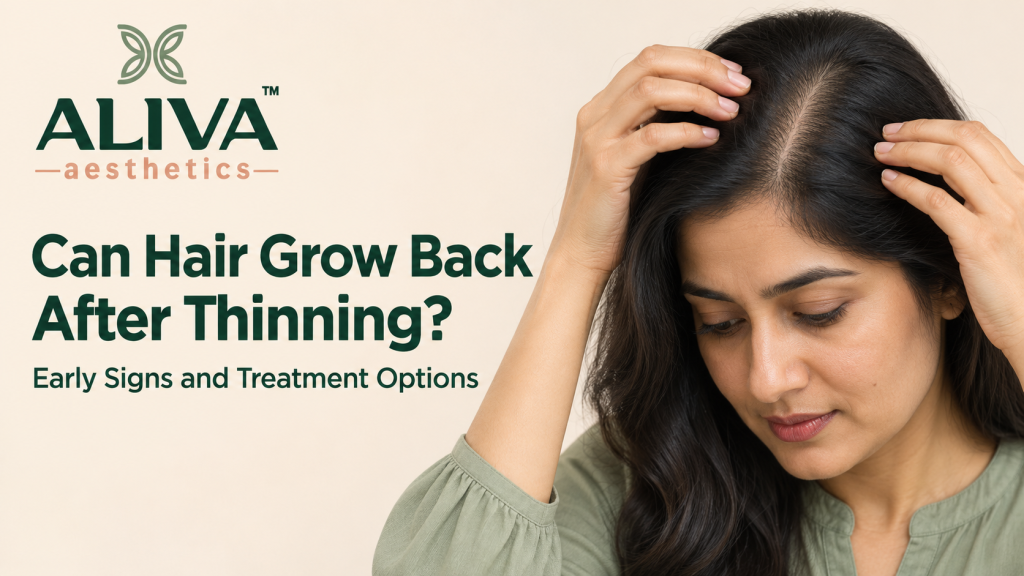
Can Hair Grow Back After Thinning? Early Signs and Treatment Options
Noticing thinner hair, a widening hair part, or reduced hair volume can be worrying. However, hair thinning does not always mean permanent hair loss.
Many people wonder, can hair grow back after thinning? Fortunately, hair regrowth is possible in several cases, especially when the underlying cause is identified early.
Although factors such as genetics, hormonal changes, stress, and nutritional deficiencies affect hair growth, appropriate treatment may improve hair density.
At Aliva Aesthetics, specialists provide personalized hair care solutions to help manage thinning hair and support healthier hair growth.
Can Hair Grow Back After Thinning Naturally?
Yes, hair can sometimes grow back naturally, depending on the cause of thinning.
For example, temporary hair loss caused by stress, illness, or nutritional deficiencies may improve after the underlying problem is addressed.
However, genetic hair loss often requires ongoing medical treatment to slow thinning and encourage regrowth.
Moreover, early treatment is important because damaged or shrinking follicles may become less responsive over time.
Therefore, understanding the cause is the first step toward choosing an effective hair thinning treatment.
5 Early Signs of Hair Thinning You Shouldn’t Ignore
Recognizing early symptoms can help you seek treatment before hair loss progresses.
1. Increased Hair Shedding
Firstly, noticing more hair on your pillow, comb, or shower drain may indicate excessive shedding.
Although losing some hair daily is normal, a sudden increase deserves attention.
2. Widening Hair Part
Secondly, a gradually widening hair part is a common sign of thinning, especially among women.
As hair density decreases, more scalp becomes visible.
3. Receding Hairline
Additionally, a receding hairline may indicate early male pattern hair loss.
However, women can also experience changes around their frontal hairline.
4. Reduced Hair Volume
Furthermore, your ponytail may feel thinner, or your hairstyle may appear less full.
Consequently, styling your hair becomes more difficult than before.
5. Visible Scalp
Finally, increasing scalp visibility around the crown or top of your head may indicate progressive thinning.
Therefore, consulting a specialist early can help determine appropriate treatment.
What Causes Hair Thinning?
Several factors can affect the natural hair growth cycle.
- Genetics: Hereditary conditions can gradually shrink hair follicles.
- Hormonal Changes: Thyroid disorders, PCOS, and menopause may contribute to thinning.
- Nutritional Deficiencies: Low iron, inadequate protein, and certain vitamin deficiencies may affect hair health.
- Stress: Physical or emotional stress can trigger temporary shedding.
- Scalp Conditions: Inflammation and infections may interfere with healthy hair growth.
Additionally, certain medications and medical conditions can contribute to hair loss.
For more information, explore Androgenic Alopecia Treatment at Aliva Aesthetics.
Best Treatment Options for Thinning Hair
Fortunately, several treatments may help manage thinning hair. However, the most suitable option depends on your diagnosis.
1. Medical Hair Regrowth Treatment
Firstly, dermatologists may recommend medications such as topical minoxidil for certain types of hair loss.
Minoxidil can support hair growth and slow further thinning.
However, visible results usually require several months of consistent use.
Therefore, always follow professional guidance before starting medication.
2. PRP Hair Treatment
Secondly, platelet-rich plasma (PRP) therapy uses concentrated platelets obtained from your blood.
These platelets contain growth factors that may help support hair follicle activity.
Additionally, PRP may improve hair density in selected patients.
However, multiple sessions may be required, and results vary.
3. GFC Hair Treatment
Another available option is Growth Factor Concentrate (GFC) therapy.
This procedure uses concentrated growth factors prepared from your blood.
Moreover, GFC is offered as a treatment option for certain hair thinning concerns, although clinical evidence remains more limited than for established medications.
Learn more about GFC Hair Treatment.
4. Hair Transplantation
For advanced hair loss, hair transplantation may be considered.
During this procedure, healthy hair follicles are moved from donor areas to areas experiencing thinning or baldness.
However, suitability depends on donor hair availability, scalp health, and the pattern of hair loss.
Explore Hair Transplant Treatment. for additional information.
How Can You Support Natural Hair Regrowth?
Along with professional treatment, healthy daily habits support overall hair health.
For example, consider these simple practices:
- Eat protein-rich foods and maintain balanced nutrition.
- Avoid tight hairstyles and excessive heat styling.
- Manage stress and maintain regular sleep.
- Use gentle shampoos suitable for your scalp.
- Address dandruff and scalp inflammation promptly.
- Avoid unnecessary supplements without medical advice.
Additionally, consistency is essential because hair growth happens gradually.
For further guidance, explore Hair Growth Treatment.
When Should You Consult a Hair Specialist?
If hair thinning continues for several weeks or becomes increasingly noticeable, consider professional evaluation.
At Aliva Aesthetics, specialists assess scalp health, hair density, medical history, and potential contributing factors before suggesting suitable care.
Furthermore, personalized treatment may help manage hair loss and support existing follicles.
Explore Hair Loss Treatment to understand available options.
Frequently Asked Questions
1. Can hair grow back after thinning?
Yes. Hair regrowth is possible when follicles remain active and the underlying cause is treatable. However, results depend on the condition.
2. How long does thinning hair take to grow back?
Hair regrowth may take three to six months or longer. Nevertheless, the timeline varies depending on the cause and treatment.
3. Can thinning hair become thick again?
In some cases, appropriate treatment can improve hair density and strand thickness. However, complete restoration is not always possible.
4. Is PRP or GFC better for thinning hair?
Both are available treatment options. However, suitability varies, and evidence supporting PRP is currently more established. A specialist can explain the differences.
Conclusion
So, can hair grow back after thinning? In many cases, yes. However, early diagnosis and appropriate treatment play important roles in improving results.
Therefore, avoid ignoring persistent hair thinning or relying entirely on cosmetic products.
At Aliva Aesthetics, individuals can explore personalized hair regrowth treatment in Vijayawada and Guntur based on their specific concerns.
Book your consultation today and take the first step toward healthier, fuller-looking hair.